Strategic thinking for a resilient and competitive Europe

Staff & Senior Advisers

Staff

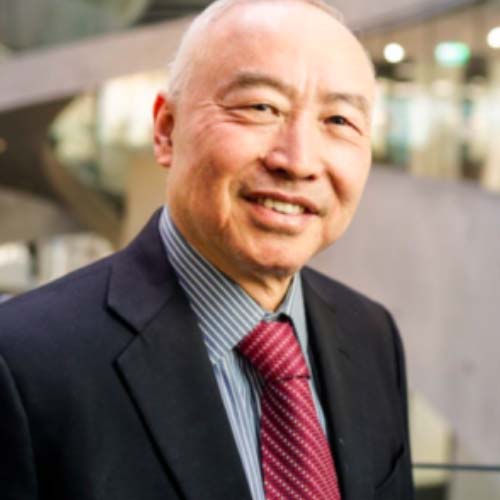
François Le Goff

François Le Goff

Director

François Le Goff joined the Club of Three in September 2014 after an 11-year career as a journalist. He worked on a number of specialised publications at Haymarket Media Group in London, for both British and European markets.

Between October 2010 and August 2014, François Le Goff was Editor of ENDS Europe – a leading news and information service on EU environmental, climate and energy policy and legislation. He also later became Editor of ENDS Waste & Bioenergy, an international publication for business professionals in the sustainable energy sector. Prior to joining ENDS (formerly known as Environmental Data Services) in 2005, he was a Reporter at Third Sector, a weekly publication for the British not-for-profit sector.

Before moving to the UK in 2001, François Le Goff was working in the humanitarian aid sector in France, including an EU-funded project in support of Roma refugees in Kosovo and Montenegro. He studied Political Sciences at the Sorbonne University and International Development at the École des Hautes Études en Sciences Sociales (EHESS).

flegoff@clubofthree.org
Senior Advisers

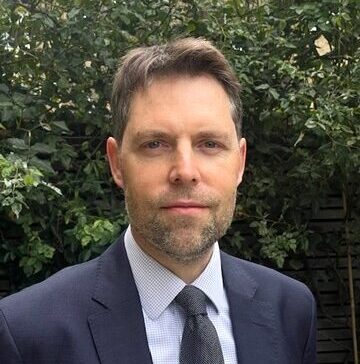
Peter Watkins

Peter Watkins

Senior Adviser, Defence and International Security

Peter Watkins was the Director General Strategy & International (2017-18) and Director General Security Policy (2014-17) in the UK Ministry of Defence (MOD). In these roles, he was responsible for strategic policy & planning; deterrence policy, including nuclear; defence relations with NATO, the EU and with key bilateral allies (US, France, Germany, Australia); and, latterly, defence industrial policy, including exports.

Previous roles included Director General of the Defence Academy (2011-14); Director of Operational Policy, MOD (2008-11); Director Typhoon (2007-08). Among earlier assignments, he was Private Secretary to the Defence Secretary (2001-03) and Counsellor (Defence Supply & Aerospace), British Embassy Bonn/Berlin (1996-2000). He was a Visiting Fellow, Harvard University (2006-07).

Peter is now a Non-Executive Member of the Board of the UK Space Agency; a Member of the Council of Cranfield University; a Visiting Senior Fellow with LSE IDEAS; and an Associate Fellow of Chatham House. He was awarded a CB and a CBE in the 2019 and 2004 Honours Lists respectively.

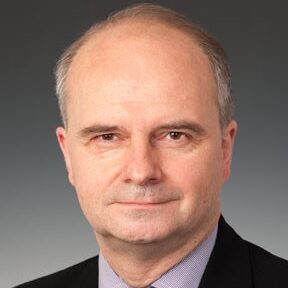
Lanxin Xiang

Lanxin Xiang

Senior Adviser, China

Lanxin Xiang is Director of the Institute of Security Policy at the China National Institute for SCO International Exchange and Judicial Cooperation (CNISCO) based in the Shanghai University of Political Science and Law. CNISCO was an initiative of Chinese President Xi Jinping which arose from a meeting of the Shanghai Co-Operation Organisation Council in September 2013 in Bishkek. The Institute of Security Policy subsumed the Centre of One Belt and One Road Studies at CNISCO which Professor Xiang had until then directed.

Professor (Emeritus) Xiang has just retired as Professor of International History and Politics at the Graduate Institute of International and Development Studies Geneva. He has previously held the Henry A. Kissinger Chair of Foreign Policy and International Affairs at the Library of Congress in Washington, DC; a Chair in International Affairs at Fudan University in Shanghai; the Zijiang Chair at East China Normal University and a Visiting Chair at the Foreign Affairs University, (CFAU), Beijing.

He is also Director of Strategic Compass Dialogues (EU-China), Schuman Center, European University Institute in Florence, and (US-China) in Washington D.C; a Senior Associate at CSIS in Washington, D.C, and Contributing Editor at Survival, IISS, London.

A graduate of Fudan University, Professor Xiang has a PhD in European studies from the Paul Nitze School of Advanced International Studies (SAIS), Johns Hopkins University. His primary interest is China’s relations with the US and Europe, with publications that include four books in English, most recently ‘The quest for legitimacy in Chinese politics: a new interpretation’, and five in Chinese.